
The Shape of Water
The Shape of WaterThe widow’s childhood story about water offers a model for how facts take the shape imposed by those who control their interpretation.
increasing Bearing strength in each event
 decreasing
Bearing strength in each eventdecreasingA Question from Childhood
A Question from Childhood
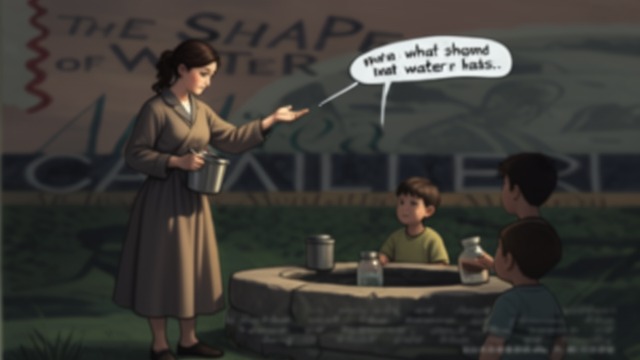
The Boy at the Well
A childhood friend asks the young widow what shape water has while arranging different containers at a well.
A Simple Answer
She understands that water takes the shape of whatever holds it.
The Widow’s Metaphor
The Widow’s Metaphor
A Warning About Interpretation
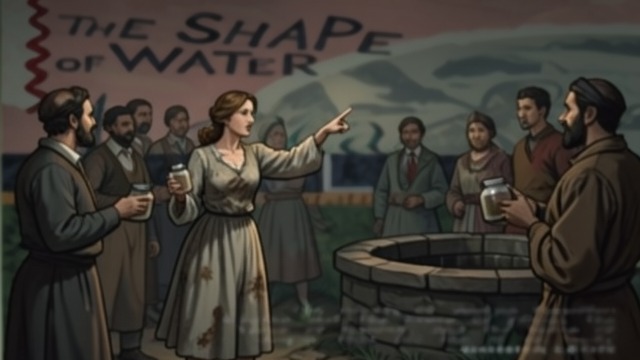
The widow invokes the childhood question after describing the political story surrounding her husband’s death.
Shape and Power
Facts may be real, but the form they acquire depends on who contains and presents them.
The Scene Takes a Shape

The Scene Takes a Shape
Arranged Objects
The necklace, bag, clothes, and car route are made to form a coherent accusation against Ingrid.
Manufactured Meaning
Their apparent clarity comes from deliberate arrangement, not necessarily from the truth they seem to describe.
Montalbano Reforms the Narrative

Montalbano Reforms the Narrative
A Counter-Shape
Montalbano places the same clues into a different sequence, beginning with Giorgio’s grief and Rizzo’s political opportunity.
Another Uncertainty
His explanation is compelling, but it too lacks proof and remains a shape imposed on incomplete facts.
The Truth Remains Fluid
The Truth Remains Fluid
No Public Verdict
The official case can close without confirming Montalbano’s reconstruction or Giorgio’s responsibility for Rizzo’s death.
Lasting Image
The metaphor leaves truth neither absent nor fixed, but vulnerable to whoever controls its container.
The widow’s childhood in Tuscany
During her conversation with Montalbano
After Rizzo’s staging is reconstructed
During the dinner with the commissioner
At the novel’s close
